Scene Deconstruction with Mark Patten BSC
Mark Patten BSC started out as a photographer on projects such as the BBC’s Life of Mammals before getting the opportunity to work with Ridley Scott Associates. After shooting promotional content for Prometheus and The Counsellor, he progressed to second unit work on Exodus: Gods and Kings (2014) and The Martian (2015). In 2017, Mark won the BSC TV Award for Best Cinematography for the BBC/FX series Taboo. This was followed by work on Silo, Raised by Wolves, and season 2 of Andor. His feature films include Luke Scott’s sci-fi/horror thriller Morgan (2016) and Robert Lorenz’s The Marksman (2021).
Directed by Alex Gabassi and Lisa Gunning, Black Doves is an acclaimed Netflix TV series set in London about an elite spy-for-hire business. When Helen, played by Keira Knightley, learns that her secret identity as a spy is in danger, she enlists the help of Sam, an old friend played by Ben Whishaw.
Black Doves is largely set in London, and Mark was determined to give the city a fresh look, with vibrant colours and high contrast for a truly cinematic feel. Mark had used Sony’s VENICE camera for the Disney+ show Andor and had been highly impressed by its huge colour space. VENICE 2 was his natural choice for Black Doves.
Mark Patten BSC started out as a photographer on projects such as the BBC’s Life of Mammals before getting the opportunity to work with Ridley Scott Associates. After shooting promotional content for Prometheus and The Counsellor, he progressed to second unit work on Exodus: Gods and Kings (2014) and The Martian (2015). In 2017, Mark won the BSC TV Award for Best Cinematography for the BBC/FX series Taboo. This was followed by work on Silo, Raised by Wolves, and season 2 of Andor. His feature films include Luke Scott’s sci-fi/horror thriller Morgan (2016) and Robert Lorenz’s The Marksman (2021).
Directed by Alex Gabassi and Lisa Gunning, Black Doves is an acclaimed Netflix TV series set in London about an elite spy-for-hire business. When Helen, played by Keira Knightley, learns that her secret identity as a spy is in danger, she enlists the help of Sam, an old friend played by Ben Whishaw.
Black Doves is largely set in London, and Mark was determined to give the city a fresh look, with vibrant colours and high contrast for a truly cinematic feel. Mark had used Sony’s VENICE camera for the Disney+ show Andor and had been highly impressed by its huge colour space. VENICE 2 was his natural choice for Black Doves.
The main approach from the show runner was that he wanted a natural look but he wanted the colour to be heightened and I feel that the Sony platform and the new VENICE 2 sensor when married to large format lenses really held the whole image in place.
Mark Patten BSC
Scene Deconstruction: Key Insights
- Coloured lighting effects created by LED lights help create the illusion of an explosion in combination with special effects smoke, dust and debris.
- The VENICE 2 camera’s large colour gamut is particularly useful when your project requires a cinematic look with rich, vibrant colours.
- Waterproof LED lights make shooting outside in the rain much easier.
- Compared to using a process trailer or low loader, shooting car sequences in an LED volume can save time and money, plus it gives you more control over the lighting.


Scene 1: The Explosion
In this scene Helen and Sam have to jump from the balcony of a London apartment block to escape a huge explosion. For Mark, this was a scene with many technical challenges. How do you film two lead artists smashing through glass windows, jumping from a building chased by an explosion and falling 40ft (12m) into a canal?
Mark worked closely with the director and VFX department to carefully storyboard the scene before building a set for both the interior and exterior of the apartment. Shots of the exterior of the actual apartment building were used as plates for wider shots. These helped to establish the setting and then the studio shots were seamlessly blended with the plates.

In part of the scene, Helen and Sam have to run through a large glass window before jumping off the apartment balcony. Stunt doubles were used for this and the breaking window glass was added as a post-production visual effect. The large blue screen outside the apartment set was then replaced with shots of the nighttime cityscape in post-production.

The first takes were locked off shots of the stunt actors jumping out of the apartment amongst a cloud of dust and debris fired out of the set by an air cannon. Mark says that a key part of making the final shot believable is getting the lighting right for these shots.
To do this flame and fire effects were programmed into the LED lighting fixtures to mimic the bright flash of light from a real explosion and fire. Then in separate, locked off shots, the fire ball itself is filmed.


In post-production, the shots with the stunt performers are blended with the fire ball shots. It’s critical to the effect that there are no joins visible to the audience so they can believe the actors are almost caught in the blast of a large explosion.
For a big exterior wide shot of the actors falling, the stunt doubles jumped from a platform in a blue screen studio that was almost 50ft (15m) high. This could then be composited into the exterior plate shots to show Helen and Sam falling through the air.
The final part of the scene was shot in a water tank for the actors to fall into. On screen the whole sequence only lasts a few seconds, yet the scene took many days to shoot.


Scene 2: The Coming Night
In this flashback scene Sam has been hired to kill a group of gangland thugs. It’s night and it’s raining. After the shootings, Sam examines the car and finds a young boy but he cannot bring himself to kill the only witness.
It’s a pivotal scene and, after discussing with the director and showrunner, Mark chose a very colourful and stylistic approach with a lot of red light and heavy rain. Filmed in winter, on location in South East London with sub-zero temperatures, this scene had many challenges – not least for actor Ben Whishaw who had to endure the cold and rain.

Mark created a lighting plan for the location to speed up the setup and the crew used Vortex LED light fixtures which are waterproof full colour panel lights. This allowed any colour to be dialled in and remotely controlled from a lighting desk.
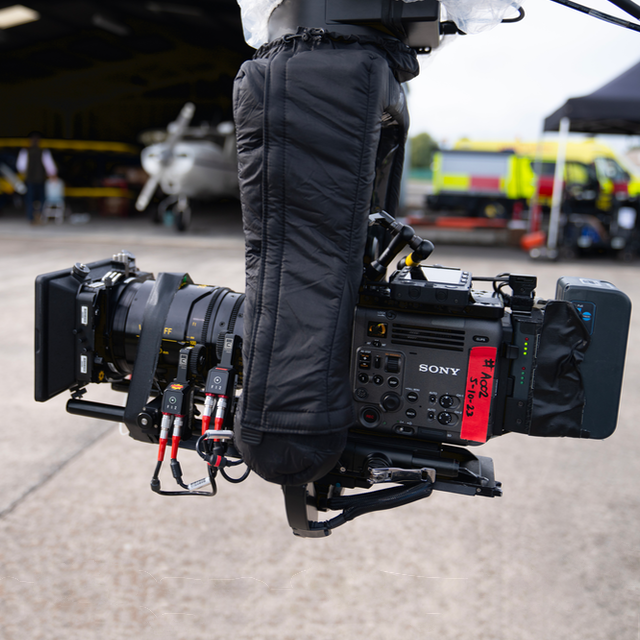
To get a bird’s eye view of the scene, and give a sense of Sam’s soul elevating above the scene, the camera was mounted on a Technocrane 45, a telescoping camera crane with a reach of up to 45ft(14m).

Scene 3: The Apartment Fight
Sam is in trouble. The boy witness from Sam’s earlier killing has grown up and sent assassins to kill him. They enter the apartment and a violent fight ensues, a centrepiece scene from the series.

To add to the drama most of the scene is shot handheld. The modified Panaspeed lenses allowed Mark to shoot with apertures as wide as t1.3 which really separates the characters from each other or the background. The VENICE Extension System 2 allows the camera’s sensor unit to be separated from the main body of the camera, creating a very compact and light camera head. This can be particularly useful for dynamic handheld shots.
By over cranking the camera, shooting at 48 frames per second, double the normal play back speed in post-production, they were able to choose when to jump in and out of slow motion.

There is so much drama that has been set in 'Black Doves' in a car that I said can we do it in a more staged way?
Mark Patten BSC
Filming Car Sequences
Traditionally car sequences have be shot using process trailers or low loaders, special platforms on which the vehicle is placed with cameras then mounted on or around the car. This rig is then driven around suitable locations while the action inside the car is filmed. This is an expensive and time-consuming process.

In recent years it has become easier to shoot these types of shots in an LED volume, a studio with a large LED wall that wraps around and above the car. A crew shoots footage of the streets and backgrounds needed and then these plates are then played back on the LED wall. The light from the LED wall falls on the car helping to give the impression that the car is outside and driving around. Mark added additional lights controlled by a desk, to compliment to the light from the wall creating a multi layered look that was easy to control.

Mark found this to be a much more practical and affordable way to shoot the car scenes for Black Doves, giving him greater control over the lighting and bypassing the restrictions associated with the use of a process trailer in a city like London such as traffic management or speed limits.