Avishai Cohen Concert shot on BURANO
Avishai Cohen has been described as “a jazz visionary of global proportions,” a bassist, singer and composer who won the Miles Davis Award at the 2023 Montreal Jazz Festival. He has his own record label (Razdaz Recordz) and his music has featured in numerous films and TV shows. However, he’s perhaps best known for his live stage performances in an eponymous trio featuring pianist Guy Moskovich and drummer Roni Kaspi.
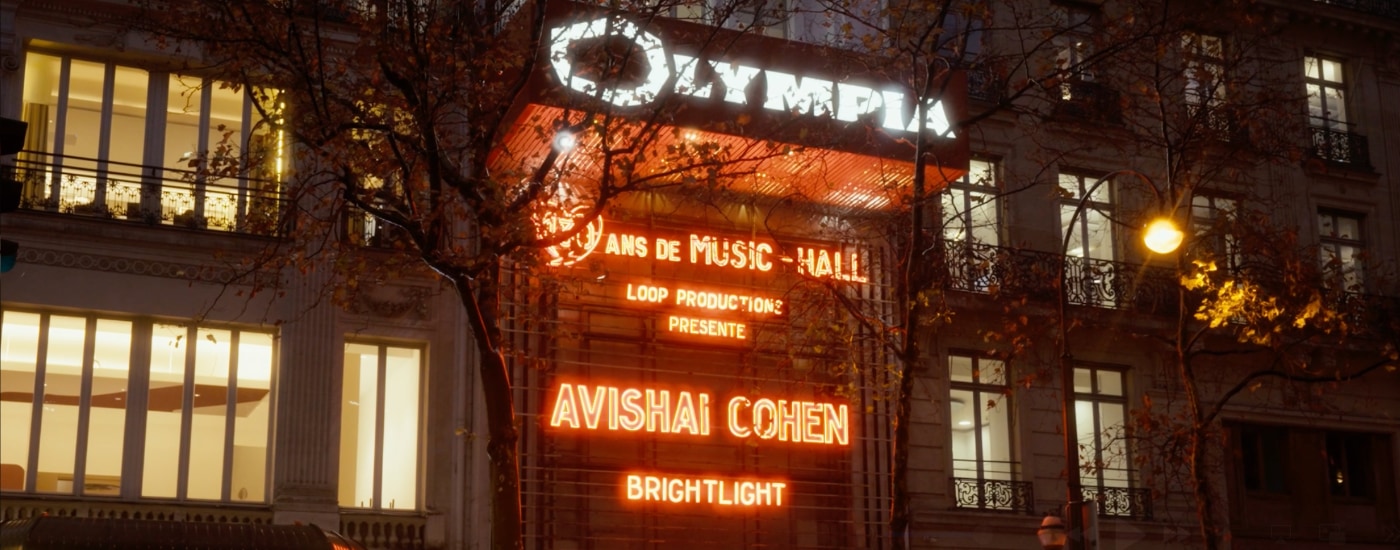
Avishai Cohen à l’Olympia (2024) is his most recent concert film, a sold-out performance recorded at the iconic L’Olympia in Paris for his new album Brightlight. PARAMAX FILMS specialise in capturing the most demanding live broadcasts and for this project they collaborated with Sphère Cameras, which recently equipped itself with Sony BURANO cameras for concert recordings.
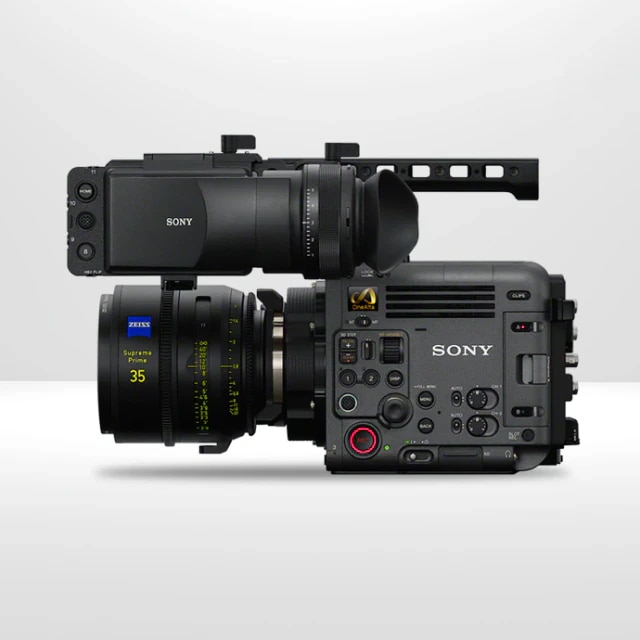
We opted for the BURANOs because they offered the best of everything, meaning they're light, practical and can be used by a single person.
Christophe Boula
President of SPHERE Cameras
Choosing BURANO
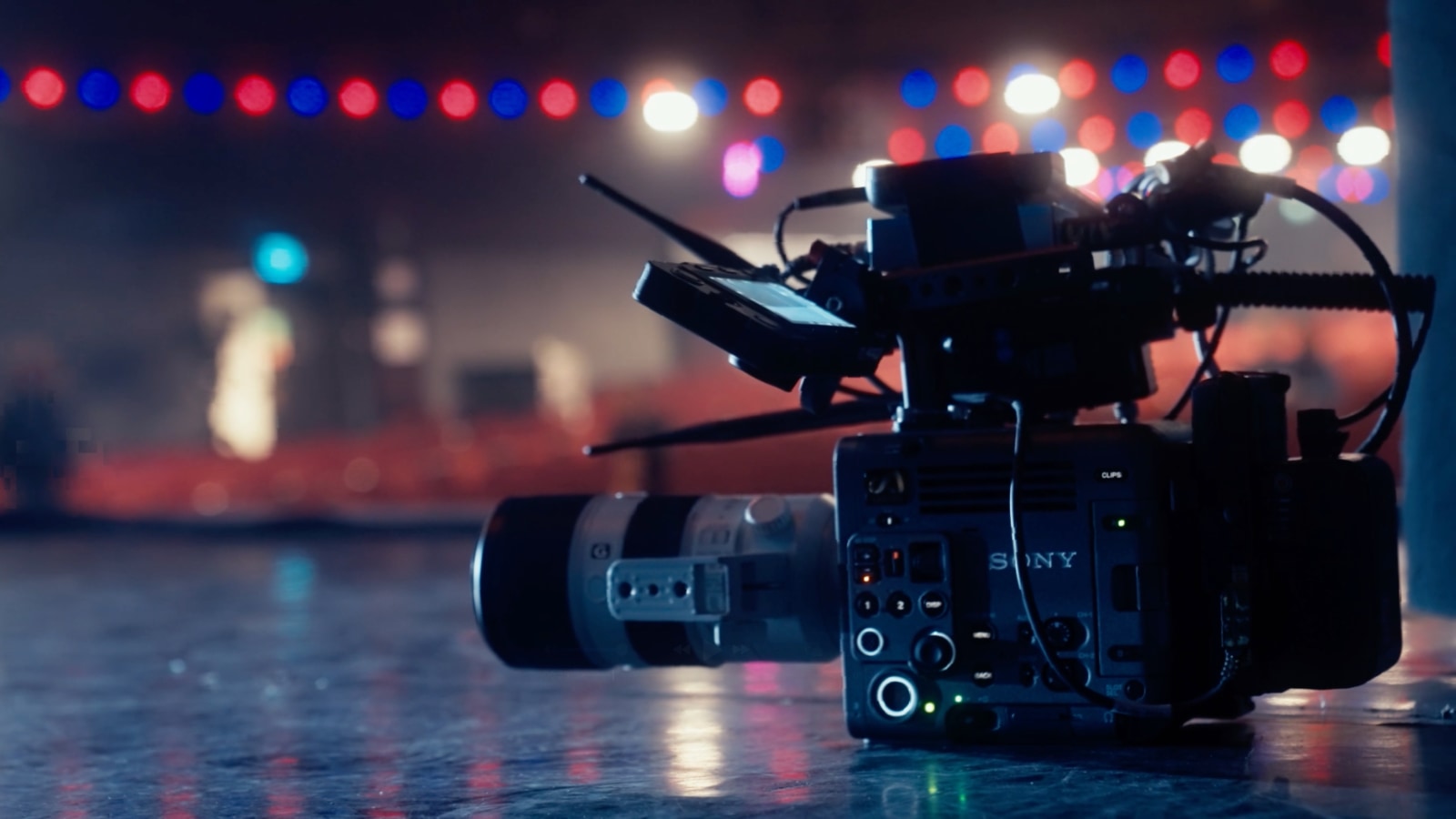
The foundation of SPHERE’s current set-up is the Sony BURANO camera which they adopted in 2024. The team has long favoured large frame cameras, such as the FX9 and FX6, but the new BURANO provided capabilities which they couldn’t ignore.
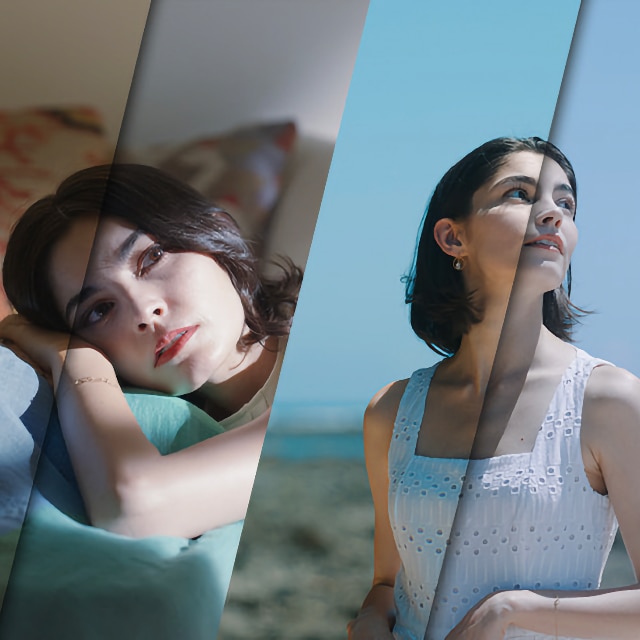
“Colours are very detailed and nuanced,” explains Christophe Boula, President of SPHERE Cameras. “Nowadays, most cameras offering 15-16 stops aren’t precise because the light is reworked by a chip in the camera and it shows during grading since detail is lacking. What makes the BURANO interesting is the fact that those details can also be found in the highlights.
“It’s very sensitive since we easily go from 800 to 3200 with a 16 stops dynamic range and, for example tonight, we’re shooting a jazz performance. That’s the kind of shooting where contrast is strong.”
Multi-cam shoot
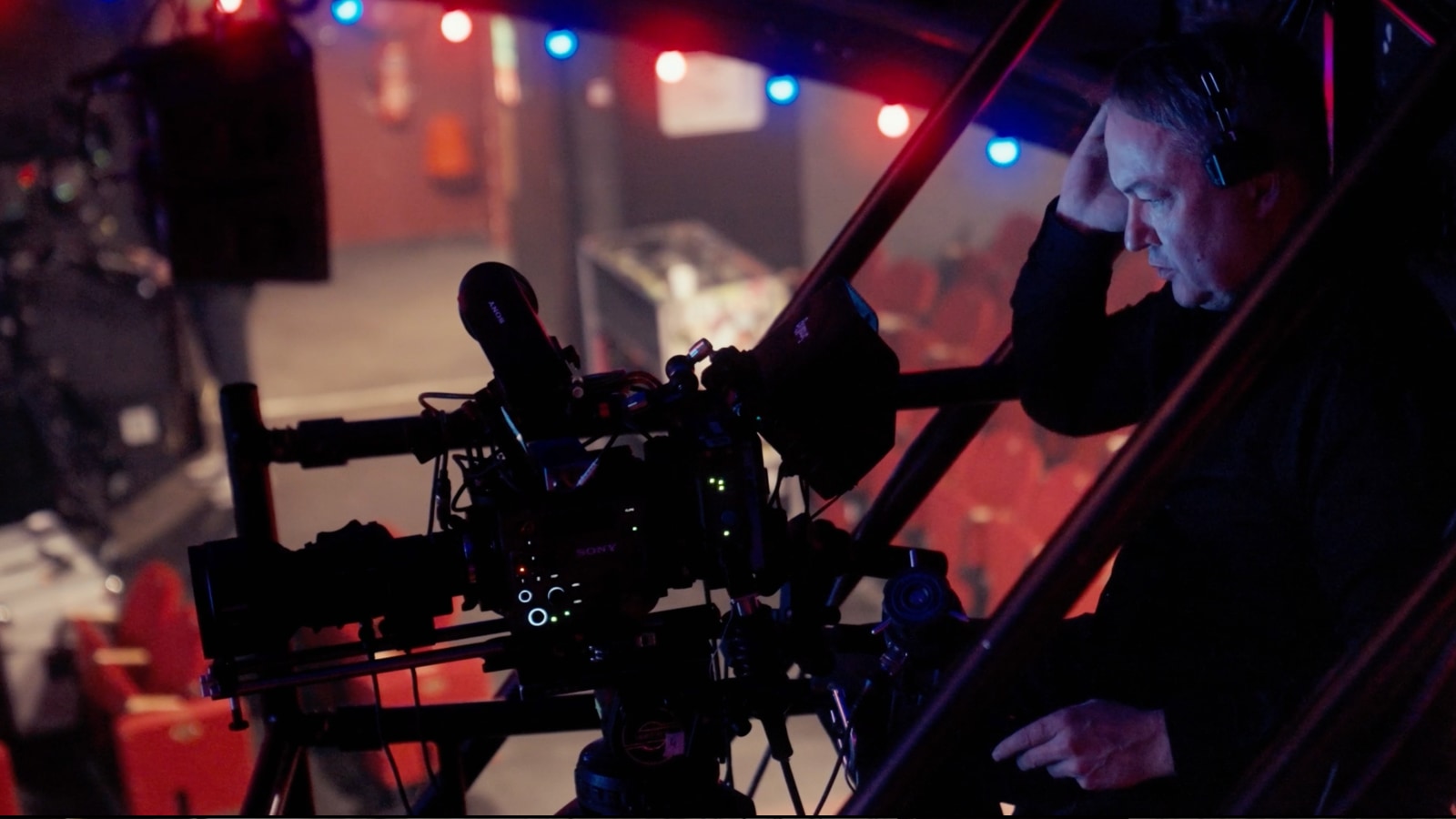
The Avishai Cohen jazz performance was shot with no less than seven BURANO cameras. DoP Ugo Tsvetoukhine has over 15 years’ experience shooting everything from documentary to advertising, but his favoured genre is concert films.
“I noticed that regarding performance capture, those cameras were very light and had an unexpected image quality,” Ugo says. “Those cameras allow us to see everything, without losing image quality.”
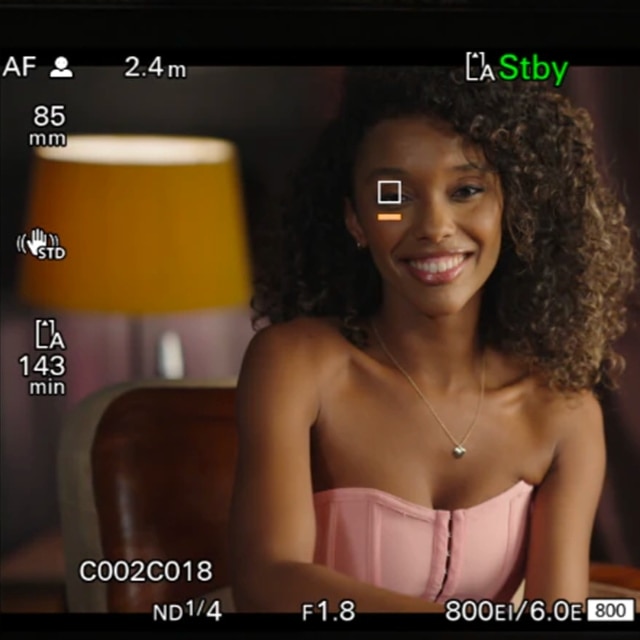
Aside from BURANO’s image quality, Ugo appreciated the advanced features that allowed him to be more effective on how he worked. When using BURANO handheld, he could trust the built-in image stabilisation to provide a steady image and the Fast Hybrid AF proved its ability to accurately to detect and maintain focus on the musicians’ faces.
“Something we had to do before and less now is focus,” he says. “When you lock on a face [with BURANO]… it sticks and that’s a real life changer, truly.”
Iconic imagery
Working alongside Ugo was Nicolas Glachant, who specialises in remote controlled head and other moving camera systems. For this shoot, he was operating a BURANO camera on a crane.
“It’s the second time I’ve worked with the BURANO,” Nicolas says, “and I think it’s a wonderful device since it perfectly fits our stability needs. Often, a camera’s set-up can be quite long and you have to add weight in the back to balance the camera optics that can be pretty heavy. I don’t have to add weight and I’m having fun. I’m less limited.”
L’Olympia dates back to 1893 and is renowned for Edith Piaf’s performances in 1961 that helped save it from bankruptcy. Christophe was mindful of an iconic visual of Piaf in a spotlight, so he insisted on BURANO cameras on two cranes, the main frontal one and another in the back, to truly capture the beauty of the concert space.

Colour Grading with X-OCN LT
Grégoire Lesturgie is a freelance colourist who’s worked for companies such as Netflix, Disney and Amazon on a wide variety of productions, from cartoons to concerts and features.
“I have quite an expertise in HDR,” he says. “Basically for us, HDR represents more space to play, more space for colour display and light. It offers a more realistic visual.”
For Grégoire, HDR is intrinsic to a premium presentation. To him, SDR looks almost greyish on modern TVs – and BURANO with X-OCN LT recording made this project a real pleasure for him.
“We shoot with seven cameras: the latest Sony BURANOs,” he explains. “It’s the first time I’ve used it under real conditions. I often use FX6 or FX9 cameras and VENICE’s for capturing. What’s interesting about those cameras is the RAW mode… During shows, there are a lot of harsh lighting effects that can be quite strong, with very profound blacks and very high whites. So I need to glide across that dynamic to get the picture I want. Working in RAW mode here is a luxury. It’s really pleasant. If I want HDR, I have an HDR mode. In ACES post production, I directly had the result I wanted, I didn’t need to go through complex colour conversions.”
Post-production was handled at Loedens Studio, another Paris-based company, which was founded six years ago by Laszlo Chatelard. It has its own 4K DCI auditorium with 7.1 sound system plus two colour grading room compatible with HDR workflow including DOLBY Vision, HLG and HDR10+.
“When we created it, we were focused on 4K,” he says. “We equipped ourselves with Sony devices for video monitoring [including] the Sony BVM-X300. It’s a real standard, a seal of quality for producers. All calibrators know it and recognize its efficiency.”
I feel like I'm working with a VENICE. Beyond the FX9, I have the RAW mode which is a plus. I've got all.
Grégoire Lesturgie
Freelance Colourist