Top tips for shooting music videos
Laurence Warder, Head of Video Production at Sony Music, shares his expert advice for young film-makers.

Acclaimed video director and film-maker Laurence Warder is Head of Production at Sony Music. Based in London, he’s shot hundreds of promo clips for big-name artists like Olly Murs and Kasabian as well as up-and-coming bands. In his own words, here are Laurence’s top tips on finding your feet in the industry – and shooting better-looking music videos.
Laurence's top tips
Music has always been a passion as long as I can remember. I was an avid gig-goer, and I still am. Then when I was in bands myself I used to shoot our own videos, using any old borrowed camcorder I could lay my hands on. I’d just hit record and hope for the best: we’d shoot in daylight without any thought about stuff like lighting properly. But very early on it gave me a sense that as a performer you could precisely control the way you presented your own image. Here are some of the lessons I’ve learned along the way.
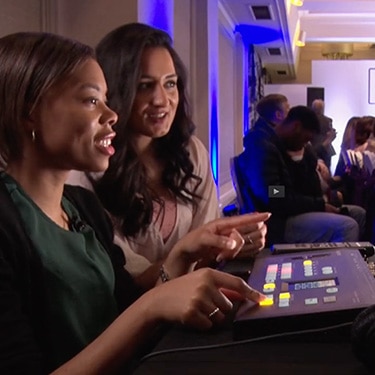
Interactive video teaser for Olly Murs’ ’24 Hrs’ album.

Think like an artist
I’m a painter as well as a video maker, and my pictures have always had a narrative feel. When I was at art college (Central St Martins), my tutor encouraged me to explore video as a medium, and I experimented with chopping up stuff that I’d filmed. It really opened my eyes in terms of understanding how to portray a story visually.
Be ready to start at the bottom
After college I was determined to get into the film industry, and I got that classic first job as a runner in London, earning virtually nothing. From there I went to a small DVD label, where I helped them out with making promotional trailers. The label was bought by a company specialising in live events, which got me into the world of music. It bought me into contact with some big-name directors – I loved that and soaked it all in. I moved up to being an associate producer, and soon I was freelancing on TV music shows. That taught me a whole lot about the business side of producing, like crews and budgets.

Understand your camera's capabilities
When I started directing around 2012, I was shooting everything on DSLR. Nowadays I’m working with bigger budgets, and that finally means I can use better cameras! A lot of my work involves shooting in low light; I often favour that moody look. And that’s why I like using professional cameras now, like the Sony FS7. They pick up a lot more information than a DSLR, and that’s great if you’re in a dark club or music venue. You also get a bigger colour range to play around with than a DSLR.
Light and shade – filming UK duo Little Hours with the Sony PXW-FS7.
Learn to be a team player
Now that I’m working with a bigger team – rather than on my own – I’ve had to learn to let go and delegate quite a few important creative and technical decisions to other people. As a director I don’t operate my own cameras so much now. The upside is that you can focus on the artist and their performance, rather than worrying about technical stuff.
You’re a director, not just a camera operator
I’m not afraid to talk frankly to performers: and in fact I’ve found that most artists appreciate being directed. It might just be telling a performer to open their eyes, rather than keeping them tightly shut. They’re little notes that the artist can take with them in the rest of their career.
Artistic intention – promo for 2017 Brit Award winner Rag’n’Bone Man shot using PXW-FS7 and PXW-FS5 Super35mm cameras.


Think fast: Working under pressure
On a video shoot you’re often faced with tough time constraints. A band might have five songs to shoot in eight hours, so you’ve got to work fast and make rapid decisions. You don’t often have the luxury of shooting things over and over again – and anyhow I don’t really like doing more than three or four takes of a performer singing the same song.
Music and movement: Capture the artist’s energy
I always feel that the camera should move with the music, and I’ve experimented a lot with track dollies, Steadicams and special rigs. Having said that, I’m not a fan of super-smooth camera movements. I like the audience to feel there’s a human being behind the camera.
Running on rails – location shoot for artist Tom Walker.
It’s the idea, not the gear
The industry’s changed hugely since I started. Nowadays everyone at a gig has their smartphone out. I’ve got nothing against that, and I’ve seen some really good stuff shot on phones. But ultimately it’s the idea that matters more than the gear you’re using.
Don’t be scared to stretch yourself
At Sony Music we’ve got a huge range of artists in different genres. It might be a pop act one day and metal the next. That’s great, because it means I have to keep pushing myself into new areas. Even when I’m filming something quite formulaic like a live concert, I’m always looking for new ways to freshen things up. It might just be using a filter, or maybe some throwaway footage as the camera hunts around for focus. Modern technology’s great, too. If you’re shooting 4K you can cut a couple of different shots out of the same scene. That can be handy at gigs when you haven’t got as many cameras as you’d like.
Never stop learning
What would I say to someone starting out today? Spend time studying the basics – exposure, focus, lenses and lighting. It’s about understanding the options you’ve got to work with. I’ve never stopped learning: what I really enjoy is discovering new techniques and fresh ideas. And most of all, be active and get out there. Go to gigs. Talk to creative people. Absorb ideas!
Live performance with US rock band Cage the Elephant.