05/09/2025
Sony Block Camera Keeps RT Robotics Drone System Flying in Any Conditions
Lightweight, modular head enables “smart camera” performance, wide area coverage, real-time edge AI processing, remote user control for aerial surveillance and inspection
Drones and artificial intelligence (AI) are among the fastest-growing technologies for commercial and industrial applications, and RT Robotics (RTR) is making the most of each through a unique camera integration with Sony’s FCB-EV9520L block camera.
RT Robotics supports utility companies, law enforcement, government agencies and other organizations requiring high-performance, drone-mounted camera systems. Applications range from power line inspections, border surveillance, remote error inspections, law enforcement, and search and rescue. When used as the camera head for RTR’s specially developed HeraSight2 aerial surveillance camera system, the FCB-EV9520L block offers the right combination of low-light performance, high optical zoom (up to 45x), and electronic image stabilization necessary for RT Robotics’ drone-based uses.
RT Robotics built the HeraSight camera system from the ground up, including its own gimbal design, specially developed software to display video streams from the FCB-EV9520L, and a handheld remote-control user interface that provides a drone pilot on the ground full control over the aerial device.
“Our clients require a camera that can work in a drone, navigate remote areas easily, capture high-quality images discreetly, and withstand varying temperature extremes,” said Quoc Luong, Founder & CEO, Real-Time Robotics, Inc. “The FCB-EV9520L is the right fit for what we need.”
Efficient Wide Area Coverage
Weight is an important consideration for any drone application, especially in remote areas, border surveillance, or challenging environmental conditions. Although the Sony FCB-EV9520L is already compact, RTR further reduced its weight and volume to meet the rigorous demands of aerial surveillance by removing its original aluminum casing, among other modifications.
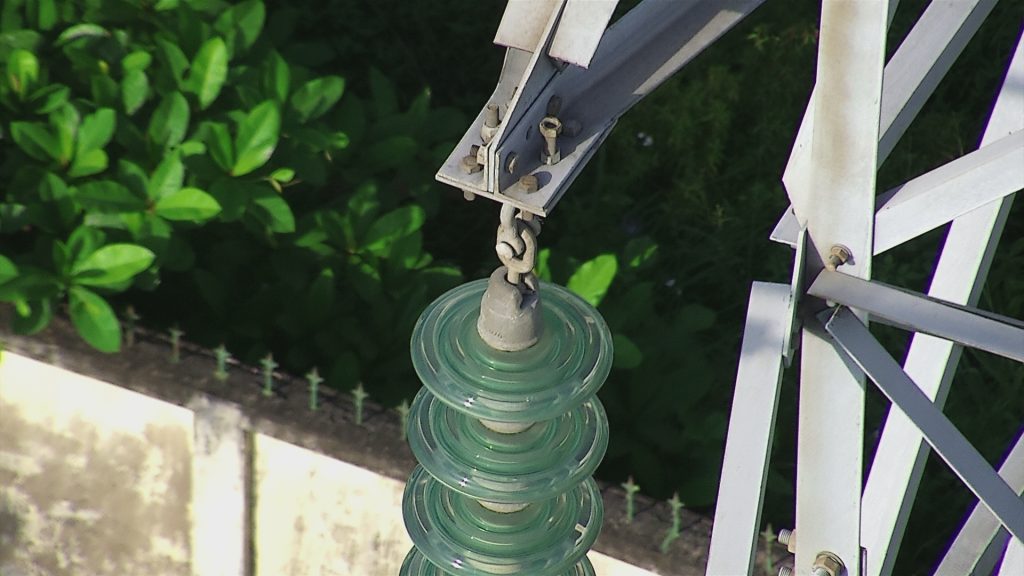 The lighter the entire drone system is, the more territory it can cover and scan effectively. RTR was able to reduce the time it takes to scan an area and find a target by 50 percent using the FCB-EV9520L with the HeraSight2.
“For drones, the weight and the size are important because if the camera is smaller, then we are able to make the gimbal smaller,” said Luong. “Our drone can carry more than one camera. If we’re able to use two FCB-equipped HeraSight systems on a drone, then we can double our scanning productivity. When we carry only one camera, it takes about 60 minutes to scan an area. With two cameras, it’s only 30 minutes.”
Artificial Intelligence, Real Benefits
RTR is doing more than capturing high-quality surveillance footage with HeraSight2. The company is performing highly accurate object counting, detection, recognition, and tracking using “edge AI,” another reason its overall camera system must be compact and lightweight.
Edge AI refers to running AI models “locally” on devices such as surveillance cameras, rather than managing them centrally using remote servers or in the cloud. With Edge AI, more functions are conducted on the camera itself.
“We can run many different kinds of AI applications at the edge,” Luong explained. “We can even train the camera to detect technical issues or system anomalies in real time.”
RT Robotics is combining the FCB-EV9520L camera with the additional processing power of NVIDIA’s Jetson Nano edge computing modules. This approach enables real-time AI processing and video compression directly on the drone, rather than relying on cloud processing. The result is a high-quality, high-speed, “smart” camera system.
NVIDIA Jetson modules are small boards that can be inserted into a device such as a camera to make deploying powerful AI models on the edge easier. The modules also make fast cameras like HeraSight2 even faster, providing additional processing power to complement the camera’s original processing capabilities.
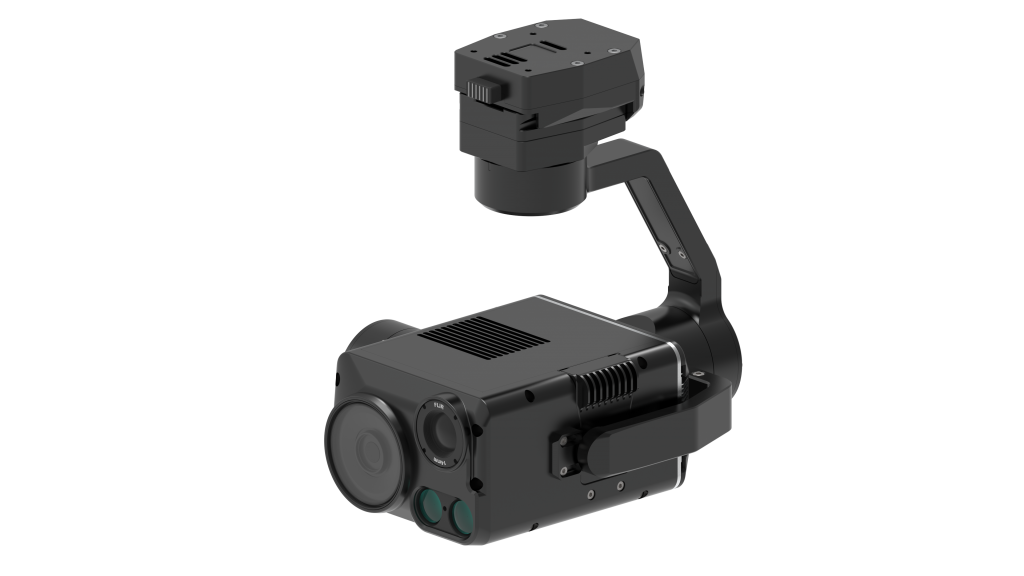
For different applications, RTR uses two Jetson modules, Orin and Xavier, to give the HeraSight2 a processing boost of anywhere between 35 to 105 TOPS (Tera Operations Per Second).
The modules also act as an encoder and decoder, streamlining the processing of edge AI applications and also managing high-bandwidth video streams from the drone to the ground stations.
“The system can’t handle uncompressed full HD video streams, so we have to compress the signal,” Luong continued. “The modules can manage both the AI functions and the uncompressed video streams.”
The FCB-EV9520L camera outputs an LVDS signal (Low Voltage Differential Signaling, a protocol for high-speed data transmission). LVDS is not directly compatible with the NVIDIA Jetson AI processing unit, which requires a CSI2 input.
RTR’s workaround included developing a specialized signal bridge to convert the camera’s LVDS output into a CSI2 signal, supporting AI-driven processing in a lightweight, modular format. The LVDS-CSI2 conversion module is one of the few in the world that is both small enough for space-constrained drone applications and compliant with National Defense Authorization Act (NDAA) regulations for government and defense-related activities, including the types of devices used for surveillance.
RT Robotics will continue its development of the HeraSight2 system to support new features and capabilities and to integrate future versions of the FCB-EV9520L camera block.